

Choosing the right wireless charger depends on your phone's specific charging standard and power requirements. This guide explains how Qi, Qi2, and proprietary fast charging protocols interact with different smartphone models. We break down the technical differences to help you select a charger that delivers optimal speed and safety for your device.
Understanding Wireless Charging Standards
Wireless charging is a technology that transfers electrical energy from a charging pad to a device without physical cables. The most common standard is Qi, developed by the Wireless Power Consortium. Qi is the baseline standard supported by nearly all modern smartphones. It typically delivers between 5W and 15W of power. Most standard Qi chargers are safe for all phones but may not unlock the fastest charging speeds available on premium devices.
Qi2 is the newer evolution of the standard, introduced to improve alignment and efficiency. It uses magnetic alignment similar to Apple's MagSafe technology. This ensures the phone sits perfectly over the charging coil. Better alignment reduces heat and increases power transfer efficiency. If you own a recent iPhone or a compatible Android phone, a Qi2 charger is often the best choice for reliability.
Understanding the difference between standard Qi and enhanced protocols is crucial. Standard Qi works everywhere but is slower. Enhanced protocols require specific hardware in both the charger and the phone. Without the matching hardware, the phone will fall back to standard Qi speeds. This is why a universal charger might charge your phone slowly even if the box claims high wattage.
Proprietary Fast Chargers and High-Speed Protocols
Proprietary fast charging is a manufacturer-specific protocol that allows for higher power delivery than standard Qi. Brands like Samsung, OnePlus, and Xiaomi use these protocols to charge phones very quickly. These systems often require a specific charger and cable to reach their maximum speed. For example, Samsung's Super Fast Charging requires a 25W or 45W charger with specific voltage and current settings.
How Proprietary Protocols Work
These systems use a digital handshake between the phone and the charger. The phone tells the charger what voltage and current it can safely accept. The charger then adjusts its output accordingly. This dynamic adjustment allows for faster charging without overheating the battery. However, if you use a generic Qi charger, this handshake does not happen. The phone will only receive standard Qi power, which is much slower.
Identifying Compatible Chargers
To use proprietary fast charging, you must buy a charger certified by the phone manufacturer. Look for specific wattage ratings on the charger box. A 25W charger is different from a 45W charger, even if both use the same cable. Using the wrong wattage charger will limit your charging speed. Always check your phone's manual for the recommended charger specifications.
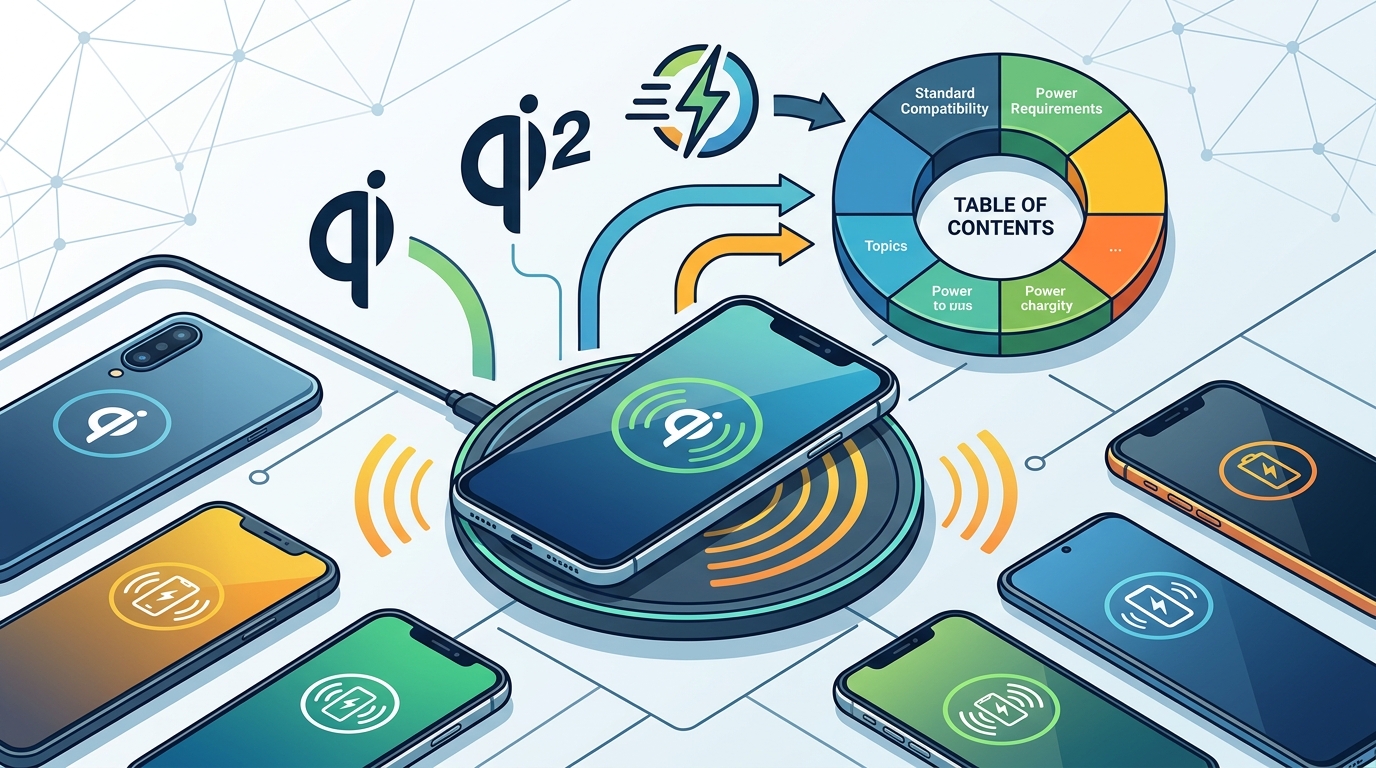
iPhone Wireless Charging Compatibility
MagSafe vs. Standard Qi
MagSafe is Apple's brand name for its magnetic wireless charging system. It is built on the Qi2 standard. A MagSafe charger snaps onto the back of the phone. This ensures perfect alignment for the 15W fast charge. A standard Qi pad does not have magnets. You must place the phone manually, which can lead to misalignment and slower charging. For the best experience with an iPhone, a Qi2 or MagSafe charger is recommended.
Case Compatibility
Phone cases can affect wireless charging performance. Thick cases or cases with metal components can block the charging signal. Apple recommends using cases that are Qi2 certified. These cases have magnets built in to maintain alignment. If your case is not certified, you may need to remove it for charging. This is a common issue for users who switch between different phone models.
Android Smartphone Charging Options
Android phones vary widely in their wireless charging capabilities. Some support only standard Qi, while others support proprietary fast charging. Samsung is the most prominent Android brand with fast wireless charging. Their Galaxy S series phones support 15W wireless charging with specific chargers. Other brands like OnePlus and Xiaomi also offer fast wireless charging, but the speeds and requirements differ.
Samsung Wireless Charging
Samsung phones use a proprietary protocol for fast wireless charging. To achieve 15W speeds, you need a Samsung-certified charger. Using a generic Qi charger will result in slower charging, usually around 5W to 7.5W. The phone will still charge, but it will take significantly longer. If you own a Samsung Galaxy S23 or S24, investing in a compatible 15W charger is worthwhile.
Other Android Brands
OnePlus and Xiaomi phones often support higher wattage wireless charging. Some models can charge at 50W or more wirelessly. However, these speeds require very specific chargers and cables. The chargers are often bulky and expensive. For most users, a standard Qi charger is sufficient for overnight charging. Fast wireless charging is best for quick top-ups during the day.
Charger Type Comparison Table
| Charger Type | Typical Speed | Best For | Compatibility |
|---|---|---|---|
| Standard Qi | 5W - 15W | Overnight charging, budget phones | All Qi-enabled phones |
| Qi2 / MagSafe | 15W | iPhone 12+, compatible Androids | Magnetic alignment required |
| Samsung Fast Wireless | 15W | Galaxy S series | Samsung-certified chargers only |
| High-Wattage Proprietary | 30W - 50W+ | OnePlus, Xiaomi flagship phones | Brand-specific chargers and cables |
Key Takeaways
- Standard Qi is the universal baseline for wireless charging.
- Qi2 adds magnetic alignment for better efficiency and speed.
- Proprietary fast charging requires specific manufacturer-certified hardware.
- iPhone users should prioritize Qi2 or MagSafe chargers for 15W speeds.
- Samsung users need certified 15W chargers to unlock fast wireless charging.
- Thick phone cases can interfere with wireless charging signals.
- Generic chargers will always fall back to standard Qi speeds.
- Check your phone's manual for recommended charger specifications.
Frequently Asked Questions
Will a standard Qi charger work with my fast-charging phone?
Yes, it will work, but it will charge slowly. The phone will detect the standard Qi signal and use that protocol. You will not get the fast charging speeds advertised by the manufacturer. This is safe but inefficient for quick top-ups.
Do I need a special cable for wireless charging?
No, wireless charging does not use cables to transfer power to the phone. However, the charger itself needs a power cable to plug into a wall outlet. The type of cable for the charger depends on the charger's input port, usually USB-C or USB-A.
Can I use a car mount charger with my phone?
Yes, if your phone supports wireless charging. Car mount chargers are typically standard Qi chargers. They are great for keeping your phone charged while driving. Look for models with automatic clamping for a secure fit.
Does wireless charging damage the battery?
Wireless charging generates more heat than wired charging. Heat is the main enemy of battery health. Modern phones have thermal management systems to prevent damage. Using a high-quality charger with good heat dissipation is recommended.
What is the difference between Qi and Qi2?
Can I charge multiple phones at once?
Yes, multi-device chargers are available. These chargers have multiple coils or pads. You can charge a phone, a smartwatch, and earbuds simultaneously. Ensure the total wattage of the charger is sufficient for all devices.
Conclusion
Selecting the right wireless charger requires understanding your phone's specific capabilities. For most users, a Qi2 charger offers the best balance of speed and compatibility. If you own a phone with proprietary fast charging, invest in the manufacturer-certified charger. At Electronic Accessories Outlet, we offer a range of practical tech accessories including wireless chargers and cable organizers. Our catalog helps you find the right gear for your daily devices. Visit our shop to explore our selection of charging solutions and workspace essentials.